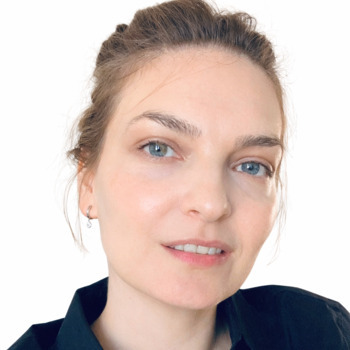
Cristina Camaras Lieberson, LCSW
Introduction
Psychotherapy is a safe space to focus on yourself and to improve your self-esteem. Together, we will work to understand the best way to make you feel better. EXPERIENCE I am a licensed psychotherapist with more than 10 years of experience in mental health in various settings, non-profit organizations, community clinics, and private practice. I have an international degree in Psychology, a Master in Social Work from the University of Illinois at Chicago, postgraduate fellowship training in Psychodynamic Psychotherapy at the Chicago Center for Psychoanalysis and a Certificate in Global Mental Health: Trauma and Recovery. My therapeutic approach is multifaceted, appropriately reflecting the complexity of each client. I practice from a dynamic approach and combine various modalities, including psychodynamic, attachment-based, and multicultural therapy. I specialize in generalized anxiety, social and performance anxiety, panic attacks, developmental trauma, complex-PTSD, depression, attachment disorders, attachment issues in romantic relations, body image issues, and low self-esteem. Additional focus: chronic occupational stress, academic and professional development. THEORETICAL ORIENTATIONS Attachment-Based Therapy is a modern form of psychodynamic therapy. Its foundation rests on the innovative works of British and U.S. psychologists John Bowlby and Mary Ainsworth, started in the 60s. The goal is to address insecure attachment styles: anxious-ambivalent, avoidant, and disorganized. It uses mentalization, reflective functioning, exploration as treatment techniques, among others. The entire personality is at work. A new sense of security, of understanding patterns of relating to self and to others are examined and resolved. The therapeutic relationship is used as a tool to heal an insecure attachment style that creates emotional dysregulation and distress in interpersonal relations. Psychodynamic psychotherapy originates in Freud's psychoanalysis. It is an in-depth form of talk-therapy that explores the emotional origins of the issues clients bring to therapy and addresses the person as a whole. The main interventions used are exploration, self-reflection and self-examination. Client develops a deep understanding of oneself and new, healthier ways to deal with life. Cognitive Behavioral Therapy (CBT) is based on a cognitive approach to mental illness. It was developed by psychologist Aaron T. Beck in the 60s in the U.S. He hypothesized that people’s emotions and behaviors are influenced by their perceptions of events, rather than by the situations per se. CBT aims to alleviate distress by helping clients develop more adaptive cognitions and behaviors. It is the most widely researched and empirically supported psychotherapeutic method. COST OF PSYCHOTHERAPY A 15-minute phone consultation is complimentary. The initial consultation is $220. Individual therapy sessions are $200 for 60 minutes and $150 for 45 minutes. Private pay $120-$150. Insurance Your insurance plan determines your costs, including deductibles, copays, or coinsurance. Benefits are verified before the first session. In-network coverage is available with Blue Cross Blue Shield, Aetna, and United Healthcare. Out-of-network coverage is accepted with all major PPO plans; a Superbill is provided for reimbursement. CLINICAL CONSULTATION AND SUPERVISION Offering individual and group consultation with a focus on attachment-based and psychodynamic psychotherapy. Individual Consultation: $80 per 60-minute monthly session (ongoing). Group Consultation: Transcultural Psychodynamic Therapy Group, sliding scale $20–$60 per session. Six-member cohorts meet for six months. Fall 2025 cohort begins November Summer 2026 cohort begins June Contact: liebersonpsychotherapy@gmail.com
Highlights
- Accepting new clients
- Telehealth appointments
- Accepts online payments and insurance
Licenses
-
LCSW #149020318 (IL)
-
LCSW #CW026258 (PA)
Specialties
Additional focus areas
Treatment Approaches
Population focus
Appointment types
- Individuals
Age groups
-
Young Adults (18-24)
-
Adults (24+)
Languages
-
English
-
Spanish
-
French
-
Romanian
Pay with insurance
-
BlueCross and BlueShield
-
Aetna
-
Aetna, Northwestern University
-
Aetna, University of Chicago
-
United Healthcare
-
U-SHIP, University of Chicago
Pay out-of-pocket
Locations
FAQ