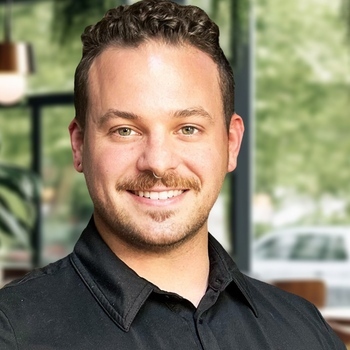
Tyler Yeagley
Introduction
Maybe everything looks fine from the outside, and that's exactly the problem. Most of the people Tyler works with come to him because they feel stuck in some way. Some are new to therapy, and many have already tried — yet understanding their patterns still hasn't been enough to change them. Tyler's background in inpatient and correctional behavioral and mental health has made him a therapist who does not flinch: nothing is too dark, too scary, or too taboo to talk about. Tyler's work centers on the pull between who you learned to be in order to belong and who you actually are at your core. The parts of yourself that cause you the most discomfort are not character flaws; they are signals pointing toward change. Tyler's work starts with fostering self-compassion, because that is what actually makes change possible. He works with shame, complex trauma, queer and trans clients, neurodiverse populations, depression, and life transitions. Tyler is warm and honest with his clients, including when honesty means naming something difficult to hear. The goal isn't to simply manage your symptoms or perform a steadier version of yourself. It's lasting change in who you get to be. Clinically, Tyler draws on Dialectical Behavior Therapy (DBT), Emotion-Focused Therapy (Greenberg), Acceptance and Commitment Therapy (ACT), Brainspotting, Parts-Work, and psychodynamic approaches — integrating them around what each person actually needs rather than working from a single method.
Highlights
- Accepting new clients
- Available on nights & weekends
- Offers free consultation
- In-person appointments
- Accepts online payments and insurance
Licenses
-
ASW #142791 (CA)
Specialties
Additional focus areas
Treatment Approaches
Population focus
Appointment types
- Individuals
Communities
-
LGBTQIA+
-
Trans & Non-Binary
-
Lesbian, Gay, & Bisexual
-
Recovery
Age groups
-
Young Adults (18-24)
-
Adults (24+)
Languages
-
English
Faiths
-
Pagan
-
Agnostic
-
Atheist
-
Buddhist
-
Hindu
-
Christian
Free intro call available
Pay with insurance
-
Aetna
-
Anthem Blue Cross Blue Shield
-
Carelon Behavioral Health
-
Carelon Behavioral Health EAP
-
Cigna Healthcare
-
EmblemHealth
Pay out-of-pocket
-
Individual Therapy - Private Pay $175
Locations
Professional Information
Education
-
Master's Degree, Social Work - Western New Mexico University
Certifications
-
Brainspotting
-
Motivational Interviewing
-
Addiction/Substance Abuse
-
CBT
Professional Affiliations
-
National Association of Social Workers (NASW)
-
CADTP
FAQ